According to the VA, “most of us will experience at least one trauma in our lifetime that could lead to PTSD.”
Sometimes, we don’t even realize that we’ve experienced trauma, especially with emotional or verbal abuses that leave less obvious scars.
Renowned trauma psychiatrist Judith Herman identified 3 stages that are crucial for trauma recovery:
1) Establishing a sense of safety and control
2) Processing the traumatic memories and losses
3) Rebuilding a new identity and meaningful life
I focus on establishing trust and rapport with my clients, as well as creating a safe space to process thoughts, feelings, and emotions that arise.
Trauma-Informed
Why are we irritated by seemingly trivial things?
What makes us anxious?
Why are some of us more depressed than others?
What triggers our deepest fears?
Carl Jung recognized that, until we make the unconscious conscious, it will direct our lives through autopilot reactions while we mistakenly consider it fate.
I help my clients identify the root causes of their struggles, and understand why they make the choices they make, so that they can break the unhealthy cycle by making a positive change.
Mind
What happens to our mind affects our body.
When we’re stressed, our shoulders can tense up. When we’re anxious, we may sweat. When we’re depressed, we may feel fatigued. When we experience severe trauma, our body can freeze up.
Likewise, what happens to our body affects our mind.
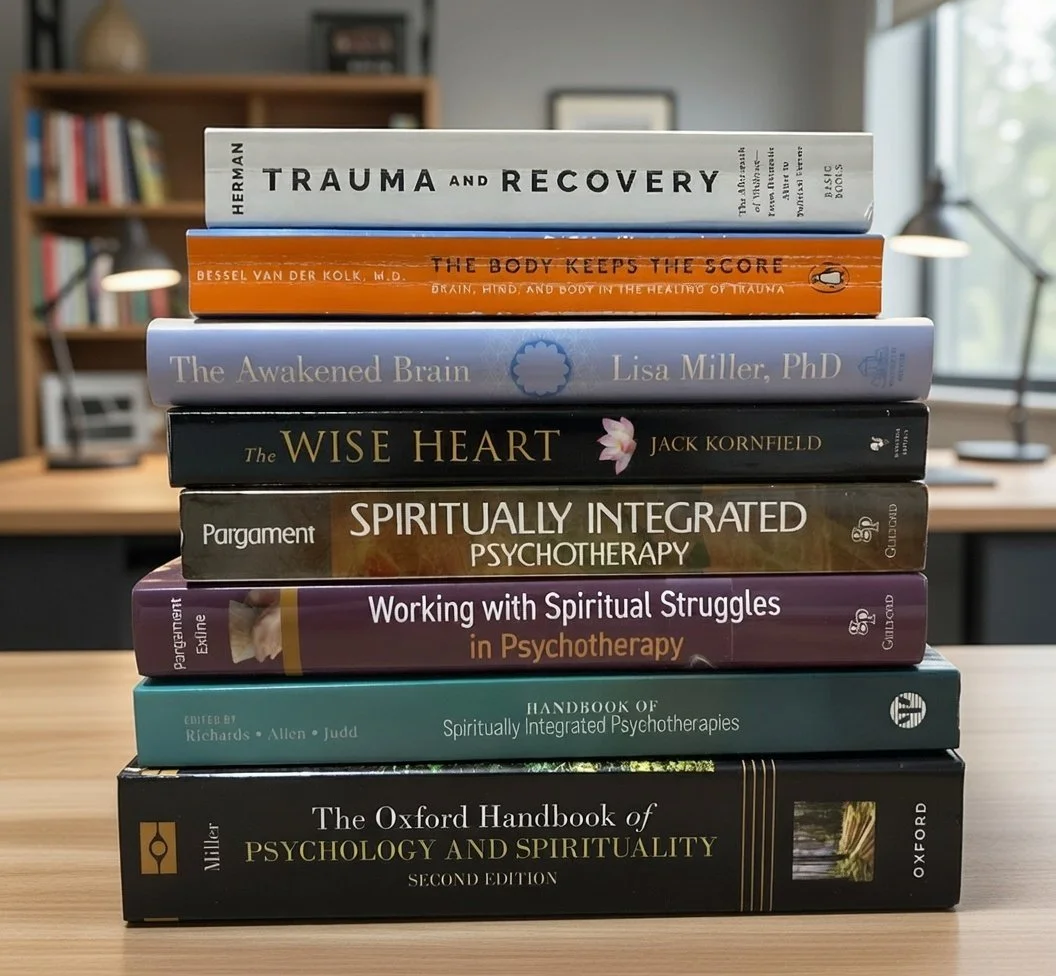
In a survey of 225 people who escaped the Twin Towers during 9/11, survivors credited acupuncture, massage, yoga, and EMDR as most helpful in overcoming their traumatic experiences (The Body Keeps The Score, Bessel van der Kolk, 2014, page 233).
The body can heal the mind. Deep breathing exercises can help calm down our mind.
Mind-Body
I adopt a broad definition of spirituality, which encompasses the notions of life force, energy, the universe, and the sacred.
A recent pioneering study at Columbia concluded that “depression and spirituality appeared to be two sides of the same coin, vastly different experiences that in fact share some significant physiology” (The Awakened Brain, Lisa Miller, 2021, page 153).
Another study found that “people high in altruism and love are less depressed years in the future than those who are less altruistic” (page 223).
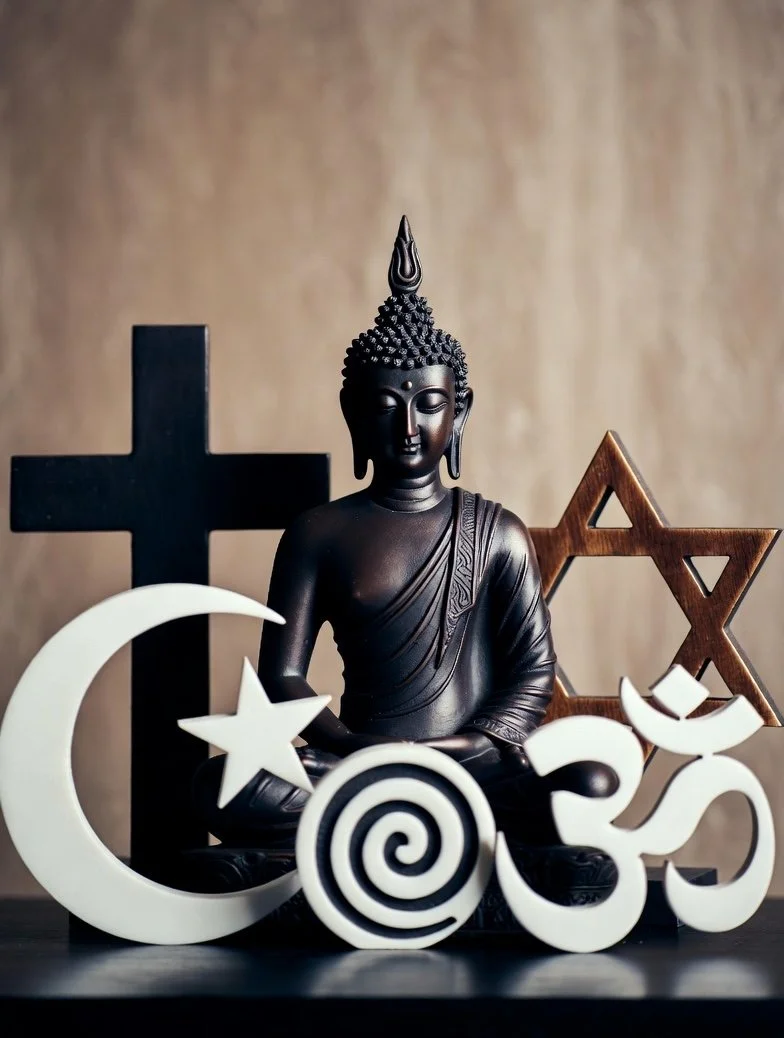
Regardless of one’s religious belief (e.g., secular, spiritual but not religious, Christianity, Judaism, Islam, Buddhism, Hinduism), integrating spiritual practices into psychotherapy can be helpful.
Prayer, contemplation, meditation, rituals, and mindfulness can facilitate healing.
Mind-Spirit
You are more than your symptoms!
As a psychotherapist, I strive to integrate body, mind, and spirit, addressing the client as a whole person.
Sacred moments in therapy can be transformative. At the same time, I acknowledge that spirituality isn’t always a safe space.
I adopt a client-led approach. It is completely up to you to decide whether or not to integrate, and what aspects to integrate.
I welcome the opportunity to work collaboratively with acupuncturists and other health professionals to achieve your optimal mental health and wellbeing.
Body-Mind-Spirit